


More client work. Less plugin overhead.
You quote the store, then lose time researching add-ons, untangling settings and fielding “one small request.” Build with a familiar WooCommerce toolkit instead of assembling a different stack for every project.
A WordPress plugin for WooCommerce. Free basics, with full feature access in Pro.
The work around the build can eat into the job.
Your expertise is designing and building stores. Separate tools add decisions and support work that are easy to miss in the original quote.
The unpaid troubleshooting detour.
A product option behaves differently after an update. You spend the afternoon tracing it across extensions instead of finishing the work you priced.
“Can we just add…?”
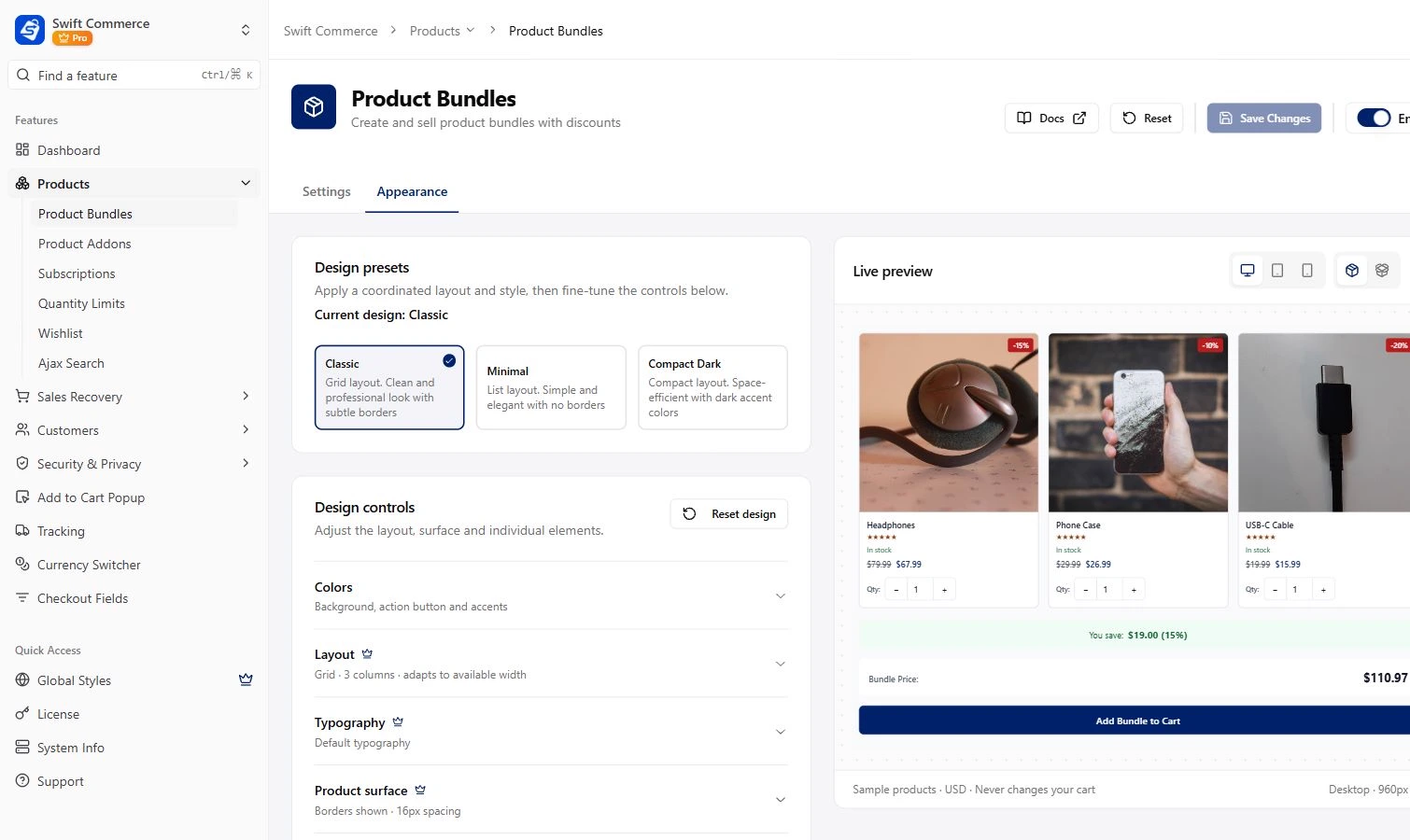
A subscription, a bundle or a wishlist sounds like a small request. A new plugin search, license and settings system can turn it into a much bigger decision.
One-off costs become your problem.
A client needs an extra capability. You have to work out which license covers it, who pays for it and who manages the renewal.
Know what you can offer before the next request lands.
Swift Commerce brings product add-ons, bundles, subscriptions, wishlists and more into one suite. You can check a familiar feature set against the brief instead of starting the extension search again.
The feature pages spell out Free and Pro coverage. Use those boundaries to price the client’s requirement, rather than discovering a missing capability during the build.
Reuse your know-how, not just your last plugin list.
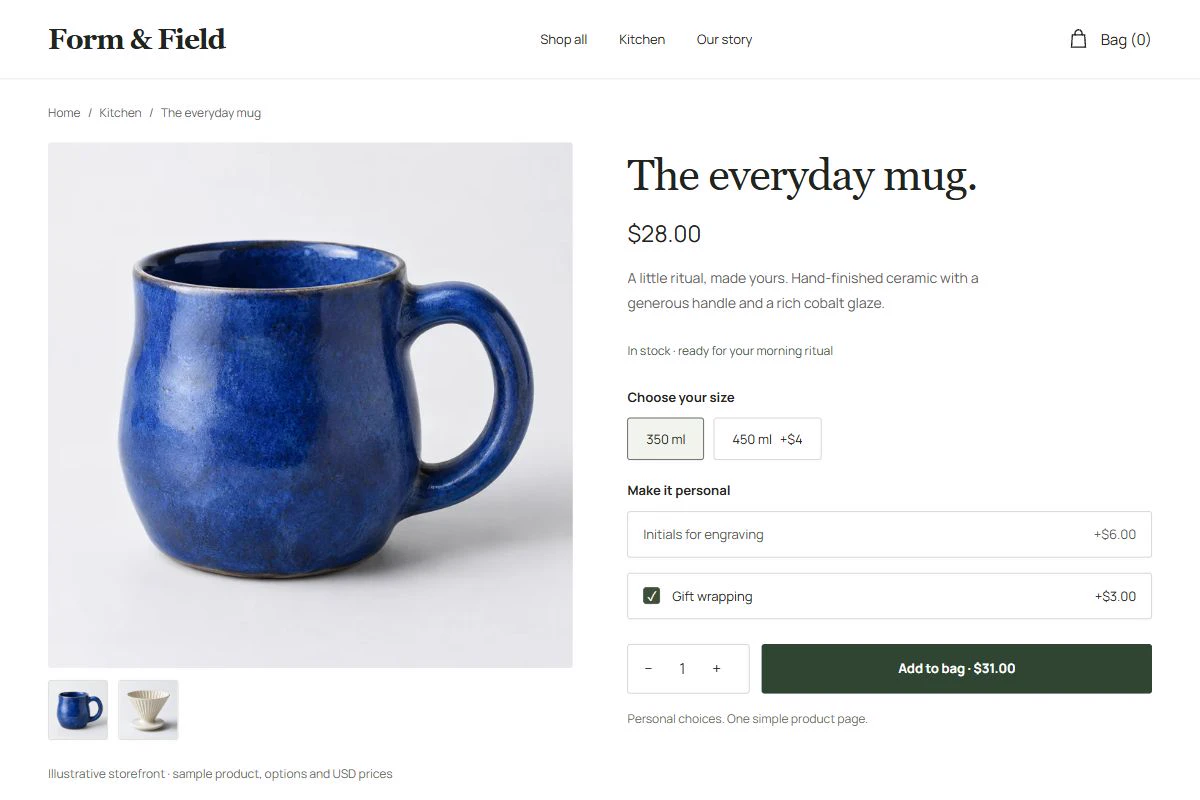
Common controls and appearance patterns give you a familiar starting point for the next client. Adjust the feature’s layout, messages and supported styling without relearning a different vendor’s interface.
Product previews help you judge the result while configuring it. Pro adds deeper appearance controls and Global Styles for supported features; each client’s settings stay in their own WordPress site.
Keep the handover simpler on both sides.
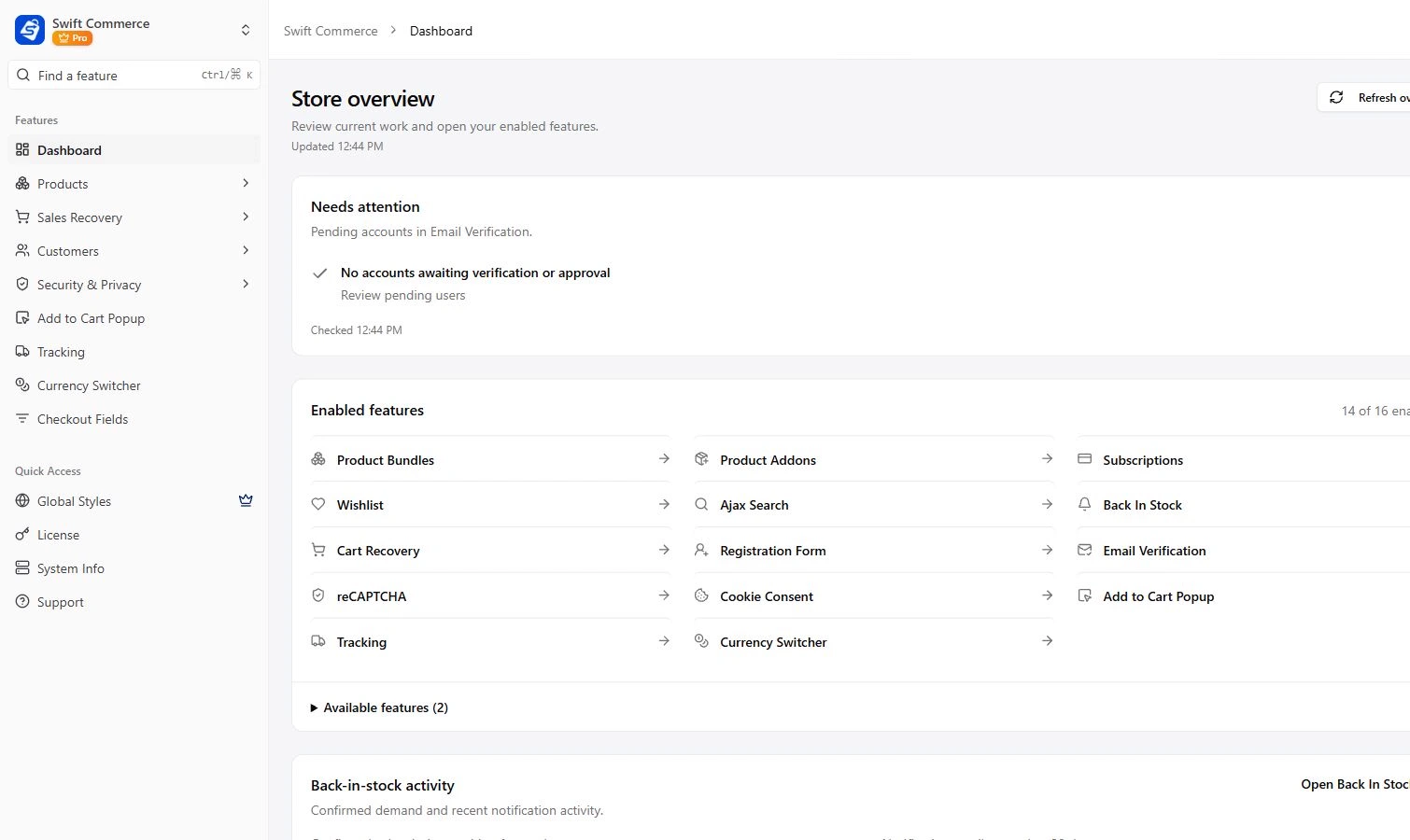
The client gets one place to find enabled Swift Commerce features. You have one product to explain and, with Pro, one support channel for the suite when a Swift Commerce question needs help.
That does not remove your maintenance agreement or testing work. It gives those conversations a clearer starting point than a collection of unrelated feature interfaces.
Quote the work. Make the tool decisions less repetitive.
| The decision | With separate extensions | With Swift Commerce |
|---|---|---|
| A new client request | Research another plugin, edition and license. | Check the known feature set and its exact edition coverage. |
| The next project | Learn another combination of settings screens. | Reuse your experience with the same dashboard and controls. |
| A support question | Work out which feature vendor to contact. | Use one premium support channel for Swift Commerce Pro. |
Put software costs in the quote—not in your margin.
Start with Free to evaluate the fit. Pro has the same complete feature set on every plan: $99 per year for one site, $199 for up to three or $499 for up to 100.
Every Pro plan includes updates and premium support. Agree with the client who owns the license and renewal; site allowances do not change what Pro includes.
Before you put it in the quote.
What to know about features, licensing and your existing setup.
Can I evaluate it before adding it to a client project?
Yes. Install Free on a test site and check the actual requirement against the feature comparisons. Pro is needed for the complete capability set; Free is not a trial of every premium control.
Do the larger plans unlock more features?
No. All paid plans include the same Pro feature set, updates and premium support. The difference is the number of websites covered.
Does one suite mean no compatibility testing?
No. Test the client’s theme, checkout, payment methods and other integrations. Consolidating features reduces separate products to coordinate; it is not a universal compatibility guarantee.
What should the client know about licensing?
Agree who manages the license, renewal and ongoing support before handover. The Freemius-backed customer portal is used for purchases and available license details; the store’s settings remain in WordPress.